

IT services will increasingly be delivered by a complex, interconnected network of federated service and data providers. Providers will consume data and services from each other, organisations will cooperate together to share services to mutual advantage, cloud service brokerage and trading will be commonplace. We believe that much of the complexity in these federated networks will come from the need to manage service agreements between organisations and departments within organisations. The current lack of support for service agreements represents a significant barrier to the uptake of the cloud by organisations who understand that change is an inevitable aspect of any business.
In our view, the inability to capture and then dynamically vary service agreements will significantly constrain enterprises’ consumption of third party services in the cloud. Until this problem is resolved, enterprises (and individuals) will be restricted to the consumption of flexible services with poorly defined quality of service, or of inflexible services backed by formal contracts.
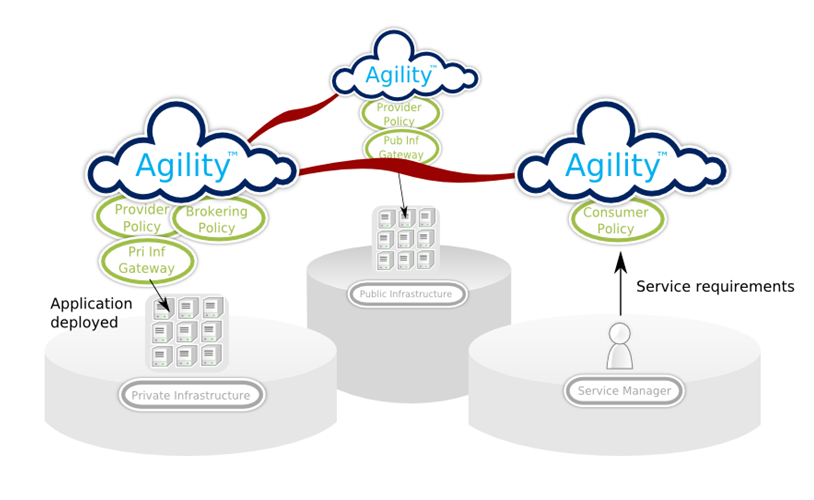
This scenario is particularly true for the provision of data as it is relatively easy to define policy for the access to data. Who can and who can't access it? What part of the data can be accessed under what circumstances? What security protocols must be in place? How will its use be licensed? What prices will be charged for its use in different scenarios? By predetermining these policies and encapsulating them within Agility DataBroker the data provider can be assured that their checks and balances will be enforced and they will also have the option of dynamically changing those policies as drivers necessitate.
Agility DataBroker allows a service or data provider to define its service agreement parameters within a flexible set of policies that are encapsulated within the framework. Users seeking access to those services may do so within the limitations of those policies and may vary the terms of access dynamically provided that they are authorised by the service provider. The end-result is a more flexible and immediate response to service or data requests, differentiating the provider from its competitors.
Agility DataBroker can be initially used for integrating as few as two silos of information, but can scale to an enterprise-wide application.
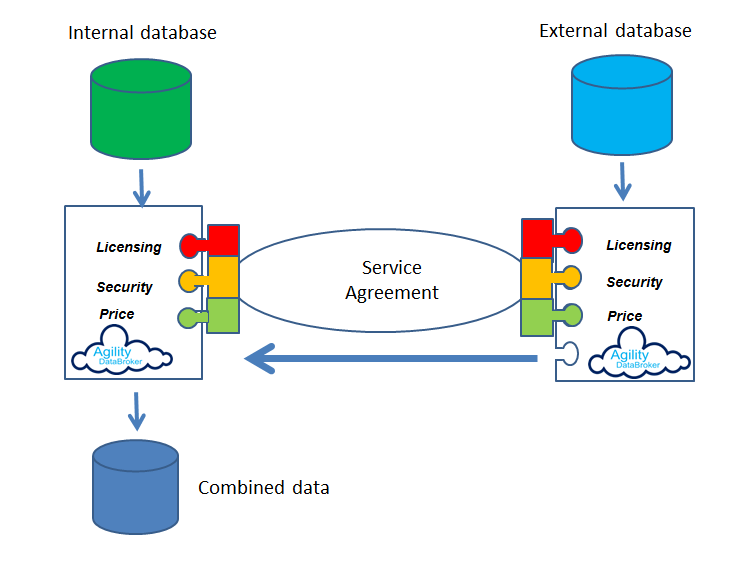
Agility DataBroker is a framework that allows an organization to unlock the value of data through its controlled consolidation, analysis and distribution. Agility DataBroker allows for data to be extracted from any combination of data sources, whether they sit in the Cloud or locally, under strictly enforced, but dynamically changeable service agreements which govern its use and deployment.


